2026 Dual-Filter Air Purifiers: Worth the $300 Premium?
Advertisements
Are 2026 dual-filter air purifiers truly revolutionary, or just an excuse to strip an extra $300 from your wallet? As manufacturers push these next-generation setups to the spotlight, home wellness enthusiasts are left deciding whether the promise of pristine indoor air matches the steep price tag.
Standard units have quietly protected our lungs for years, but double-sided filtration systems claim to clear rooms twice as fast with far less noise. When every ambient particle matters, upgrading to dual-stage filtration sounds tempting—yet the real value depends on what happens after you unbox it.
We cut through the marketing noise to analyze performance benchmarks, long-term costs, and real-world efficiency. Read on to discover if investing in high-end air treatment tech is the right move for your home and budget.
The Evolution of Air Purification: What Dual-Filter Technology Offers
The landscape of air purification is continuously evolving, with manufacturers pushing boundaries to enhance indoor air quality. Dual-filter systems represent a significant leap from traditional single-filter designs, promising more comprehensive contaminant removal.
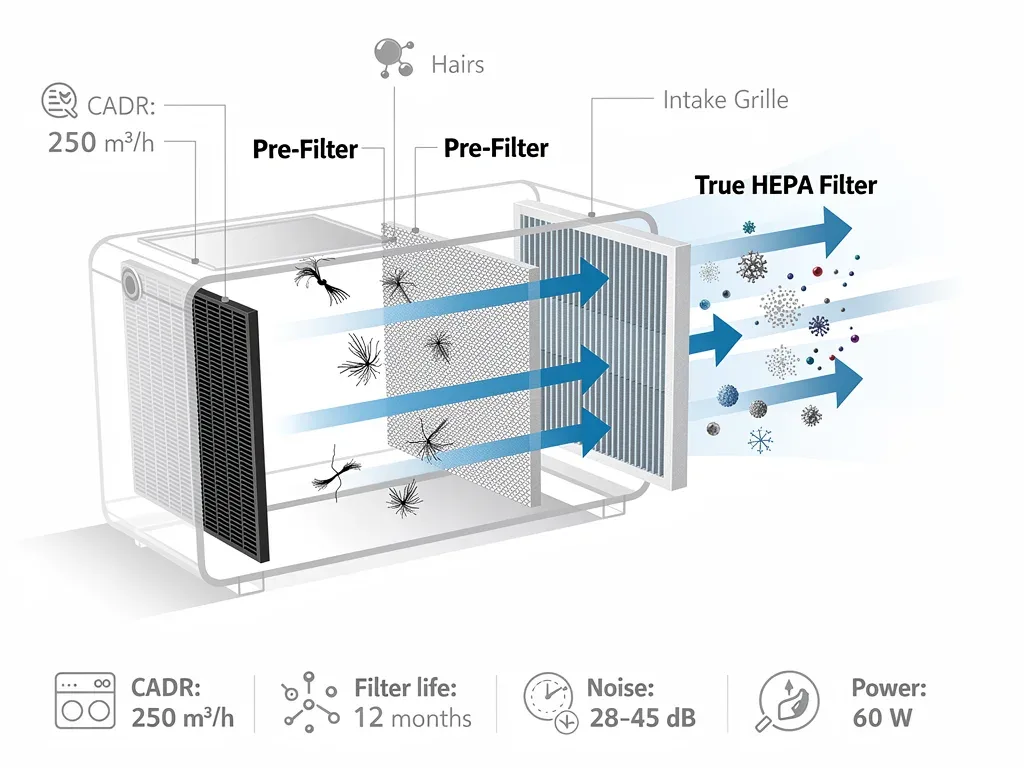
These advanced systems typically integrate a pre-filter, a True HEPA filter, and often an activated carbon filter, sometimes in a multi-stage configuration. This layered approach aims to tackle a wider spectrum of airborne pollutants more effectively and efficiently.
Understanding the mechanics behind these dual-filter air purifiers is key to assessing their true value. The primary goal is to extend filter life while improving the capture rate of microscopic particles, gases, and odors that single-filter units might struggle with.
Unpacking the True HEPA Standard in 2026 Models
True HEPA filtration remains the gold standard for capturing airborne particulates, removing 99.97% of particles as small as 0.3 microns. In 2026 dual-filter air purifiers, this core technology is often augmented for superior performance.
Many 2026 models feature enhanced True HEPA filters designed with higher pleat counts or advanced materials. This allows for greater surface area and improved capture efficiency without significantly increasing air resistance, maintaining optimal airflow.
The integration of a robust pre-filter before the True HEPA layer is critical. This initial stage captures larger particles like dust, pet dander, and lint, thereby protecting the more delicate True HEPA filter from premature clogging and extending its operational lifespan.
Advanced Filtration Beyond HEPA
Beyond the True HEPA component, many 2026 dual-filter air purifiers incorporate additional filtration stages. This often includes activated carbon filters, which are highly effective at adsorbing volatile organic compounds (VOCs), odors, and harmful gases that HEPA filters cannot capture.
Some premium dual-filter units might also include specialized filters for specific pollutants, such as formaldehyde or allergens. This multi-stage approach is what sets these newer models apart, offering a more holistic air purification solution for diverse indoor environments.
Pre-filter: Captures large particles, protecting subsequent filters.
True HEPA filter: Traps 99.97% of particles down to 0.3 microns.
Activated Carbon filter: Absorbs gases, odors, and VOCs.
Specialized filters: Targets specific pollutants like formaldehyde or bacteria.
Performance Metrics: CADR and Particle Removal Efficiency
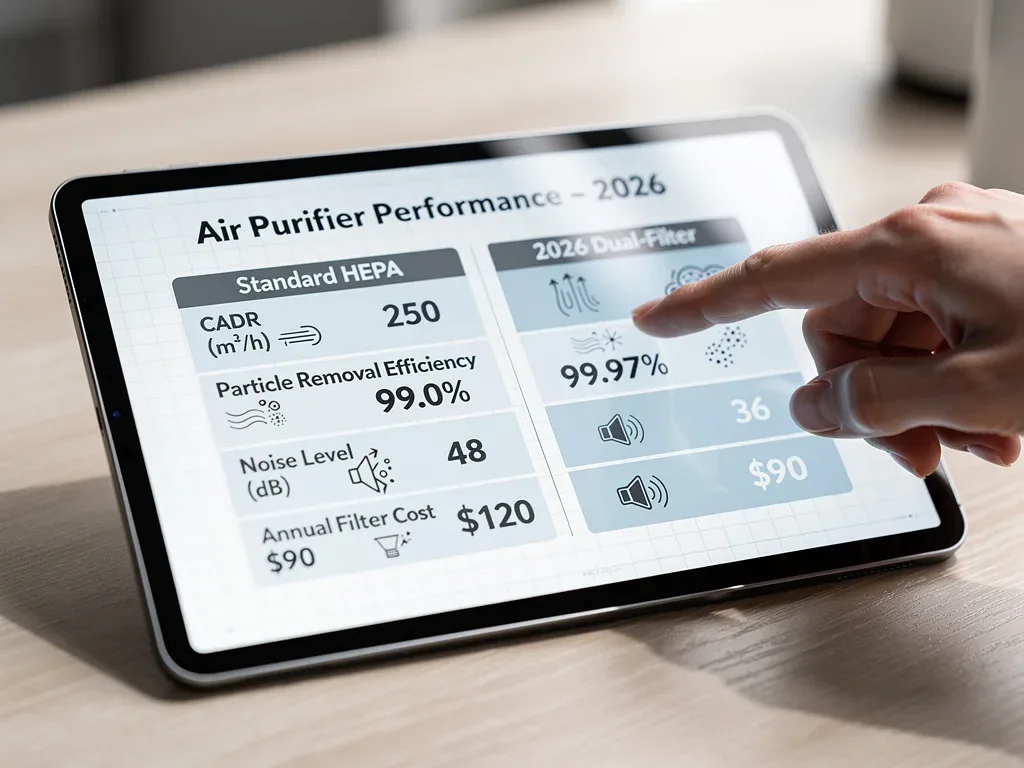
When evaluating any air purifier, the Clean Air Delivery Rate (CADR) is a crucial metric, indicating how quickly the unit cleans a room. For 2026 dual-filter air purifiers, manufacturers claim significantly improved CADR ratings across various particle types.
These enhanced CADR figures are often attributed to more powerful fans combined with the less restrictive, yet highly efficient, dual-filter designs. This means a dual-filter unit can purify a larger room or clean the air in a standard room more rapidly than its single-filter counterparts.
Particle removal efficiency, especially for ultra-fine particles (UFP) below 0.1 microns, is another area where 2026 dual-filter air purifiers aim to excel. While True HEPA is rated for 0.3 microns, advanced designs often show superior performance against even smaller contaminants.
Real-World Performance vs. Lab Results
While lab tests provide controlled data, real-world performance can vary based on room size, air leakage, and pollutant load. However, early reviews suggest that 2026 dual-filter air purifiers consistently outperform standard units in typical home environments.
Consumers report noticeable improvements in air quality, particularly in homes with pets, smokers, or those located in areas with high outdoor pollution. The enhanced capacity of dual-filter air purifiers to handle continuous pollutant exposure appears to be a significant advantage.
The ability of these dual-filter systems to maintain high efficiency over longer periods, even in challenging conditions, suggests a robust and reliable performance. This sustained effectiveness is a key factor in justifying the higher initial investment for many users.
The $300 Premium: Cost Analysis and Long-Term Value
The central question for many consumers is whether the $300 premium for 2026 dual-filter air purifiers is justified. This price difference needs to be analyzed not just in terms of initial outlay but also in long-term operational costs and overall value.
While the upfront cost is higher, manufacturers often argue that the extended filter life due to the pre-filter stage can offset some of this. Fewer filter replacements over the unit's lifespan could lead to savings, though this varies by brand and usage.
Beyond monetary costs, the value proposition includes health benefits from superior air quality, which is harder to quantify but critically important. For individuals with allergies, asthma, or other respiratory sensitivities, the enhanced filtration offered by dual-filter air purifiers could be invaluable.
Filter Replacement Costs and Lifespan
A critical component of the long-term cost analysis for any air purifier is the price and frequency of filter replacements. For 2026 dual-filter air purifiers, while the individual filters might be slightly more expensive, their combined lifespan often exceeds that of single-filter units.
Manufacturers typically recommend replacing True HEPA filters every 6-12 months and activated carbon filters every 3-6 months in standard units. Dual-filter systems often boast longer intervals for the main HEPA filter, thanks to the protective pre-filter, potentially reducing annual replacement costs.
It is essential for prospective buyers to research the specific replacement filter costs and recommended schedules for any dual-filter air purifier they consider. A $300 premium might be recouped over 3-5 years if filter costs are significantly lower or if the filters last considerably longer.
Noise Levels and Energy Consumption in 2026 Models
Beyond filtration performance, user experience factors like noise levels and energy consumption are increasingly important. 2026 dual-filter air purifiers are designed to deliver powerful air cleaning without becoming a disruptive presence in the home.
Advances in motor technology and aerodynamic fan designs allow these newer units to operate at lower decibel levels, even at higher fan speeds. This makes them more suitable for bedrooms, offices, or living areas where quiet operation is desired.
Energy efficiency is another key consideration, especially for devices that run continuously. Many 2026 dual-filter air purifiers are Energy Star certified, indicating they consume less power than conventional models, translating into lower electricity bills over time.
Smart Features and User Experience
Modern air purifiers, including many 2026 dual-filter air purifiers, come equipped with smart features that enhance usability and efficiency. These can include Wi-Fi connectivity, app control, air quality sensors, and auto modes that adjust fan speed based on detected pollution levels.
Integrated air quality sensors provide real-time feedback on indoor pollutant levels, allowing users to monitor their environment and trust that their purifier is working effectively. This level of control and transparency adds significant value to the user experience.
Features like filter life indicators and automatic ordering for replacement filters further simplify maintenance, ensuring optimal performance of the dual-filter air purifiers. These conveniences contribute to the overall premium experience associated with these advanced units.
Who Benefits Most from 2026 Dual-Filter Air Purifiers?
While improved air quality benefits everyone, certain demographics and environments will experience the most significant advantages from 2026 dual-filter air purifiers. Understanding these specific needs helps in determining if the investment is worthwhile.
Individuals suffering from severe allergies, asthma, or other respiratory conditions often find substantial relief with advanced filtration systems. The comprehensive removal of allergens, pollen, dust mites, and pet dander can dramatically improve their quality of life.
Homes with pets, especially multiple animals, generate significant amounts of dander and odors. Dual-filter air purifiers with robust activated carbon stages are particularly effective at neutralizing pet-related smells and capturing airborne pet allergens, creating a fresher living space.
Addressing Specific Air Quality Challenges
Residents living in urban areas with high levels of outdoor pollution, including smog, vehicle exhaust, and industrial emissions, can greatly benefit. The enhanced filtration of VOCs and fine particulate matter by dual-filter air purifiers offers a crucial line of defense indoors.
Homes with smokers or those exposed to wildfire smoke also require more robust air purification. The multi-stage filtration in 2026 dual-filter air purifiers is designed to tackle these complex mixtures of gases and particulate matter more effectively than standard units.
Finally, anyone prioritizing optimal indoor air quality for general health and well-being will find value in these advanced systems. The peace of mind that comes from knowing your indoor environment is as clean as possible is a significant, albeit intangible, benefit of dual-filter air purifiers.
Making the Decision: Is the Premium Justified?
The decision to invest in 2026 dual-filter air purifiers ultimately boils down to individual priorities, budget, and specific air quality needs. For many, the $300 premium represents a significant consideration, requiring a careful weighing of pros and cons.
If you live in an area with poor air quality, have severe allergies or asthma, or own multiple pets, the enhanced performance and comprehensive filtration offered by dual-filter air purifiers could easily justify the additional cost. The health benefits alone might outweigh the investment.
However, for those with minimal air quality concerns or tighter budgets, a high-quality standard True HEPA air purifier might still be sufficient. It is crucial to assess your specific situation and compare the features and long-term costs of both options before making a purchase.
Feature | Benefit |
|---|---|
Dual Filtration | Superior removal of particles, gases, and odors. |
Extended Filter Life | Pre-filter protects HEPA, potentially reducing replacement frequency. |
Enhanced CADR | Cleans air faster in larger spaces, improving overall efficiency. |
Smart Features | Real-time monitoring, app control, and auto-adjustments. |
Frequently Asked Questions About Dual-Filter Air Purifiers
What makes 2026 dual-filter air purifiers different from standard models?▼
2026 dual-filter air purifiers typically incorporate multiple distinct filtration stages, often including a dedicated pre-filter, an advanced True HEPA filter, and an activated carbon filter. This multi-layered approach allows for more comprehensive removal of particles, gases, and odors compared to single-filter units, often leading to better overall air quality and extended filter life for the primary HEPA filter.
Is the $300 premium for dual-filter air purifiers justified?▼
The justification for the $300 premium depends on individual needs. For those with severe allergies, asthma, pets, or living in highly polluted areas, the enhanced performance, longer filter life, and comprehensive contaminant removal of dual-filter air purifiers can be well worth the investment. For others with less critical needs, standard HEPA units might suffice.
How often do filters need to be replaced in dual-filter air purifiers?▼
Filter replacement frequency for dual-filter air purifiers varies by manufacturer and usage. Generally, the pre-filter might be washable or need occasional cleaning, while the True HEPA filter could last 12-18 months due to the pre-filter's protection. Activated carbon filters typically require replacement every 6-12 months. Always check the manufacturer's specific recommendations for your model.
Do dual-filter air purifiers consume more energy?▼
Not necessarily. While dual-filter air purifiers often have more powerful motors to move air through multiple filters, many 2026 models are designed with energy efficiency in mind. Many are Energy Star certified, indicating they meet strict energy efficiency guidelines. Modern motors and smart features like auto-mode can help optimize energy consumption, often resulting in comparable or even lower operational costs than older, less efficient single-filter units.
Can dual-filter air purifiers help with pet odors and allergens?▼
Yes, dual-filter air purifiers are highly effective against pet odors and allergens. The True HEPA filter efficiently captures pet dander, which is a common allergen. Simultaneously, the activated carbon filter, often a significant component in dual-filter systems, excels at adsorbing and neutralizing pet odors, leaving your home smelling fresher. This makes them an excellent choice for pet owners seeking comprehensive air purification.
Looking Ahead
The market for air purification is clearly trending towards more sophisticated, multi-stage systems. The 2026 dual-filter air purifiers represent a significant step in this direction, offering enhanced performance and a more comprehensive approach to indoor air quality.
As consumer awareness of air quality grows, these advanced units are likely to become the new standard, pushing innovation further.
It will be crucial to observe how manufacturers continue to balance performance with affordability, and how long-term data on filter longevity and real-world effectiveness further shapes consumer perception. The investment in dual-filter air purifiers reflects a broader commitment to health and well-being in the modern home.